
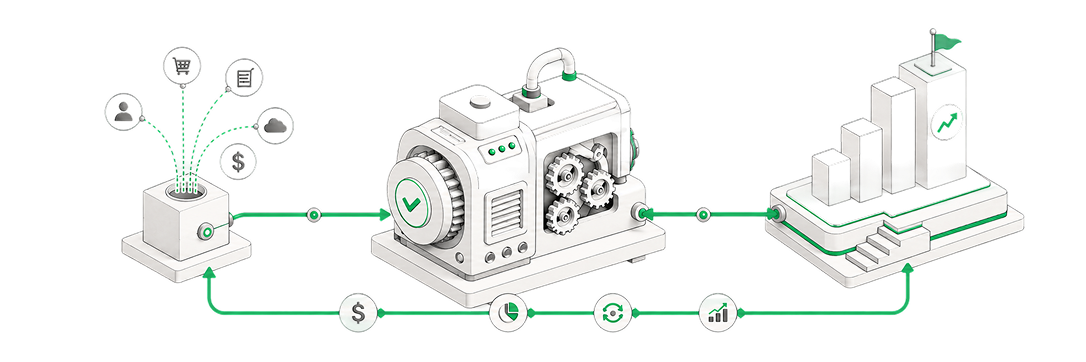
When assessing runway and scale readiness, B2B executives frequently ask the wrong question: “How many new accounts do we need to win?” This focus on pure top-line acquisition masks a deeper operational vulnerability. A highly profitable B2B business can easily collapse if its cash arrives too slowly to support execution. Growth is treated as a discretionary, opportunistic expense—funded out of whatever margin happens to be left over. This approach forces businesses into a volatile cycle of feast and famine, where cash flow constraints routinely choke pipeline velocity.
Whether a business sells technology platforms, professional expertise, industrial solutions, or engineered products, growth consumes resources before revenue fully materialises. Paying operational expenses today and collecting from enterprise clients 90 to 180 days later creates a structural financing burden that limits agility. Stagnation is often budgeted for inadvertently by failing to treat growth as a non-negotiable operational cost. Sustained market velocity requires a fundamental commercial reset: you must optimize your billing architecture to ensure your current revenue actively funds future expansion, maintaining a minimum of six to nine months of operating capital.
The Operational Application
To establish a self-sustaining commercial model that eliminates working capital bottlenecks, operationalize these two frameworks:-
Commercial Cash Architecture: Align commercial structures with the cash requirements of the operating model. This may include milestone-based billing, advance commitments, subscription structures, retainers, deposits, or outcome-linked payment schedules.
- Growth Investment Discipline: Treat growth investments as planned operating commitments rather than discretionary spend. Marketing, sales capability, technology enablement, and market expansion should be funded deliberately—not only when surplus cash exists.
Growth becomes fragile when the organisation creates demand faster than it can fund delivery and expansion. Commercial maturity means building a revenue engine where today’s performance creates tomorrow’s capacity.